Start with the Learner.
Build from there.
Brighter Futures Life Skills is designed around functional everyday outcomes rather than completing activities for their own sake.
Understand the Learner
Strengths, interests, communication, routines, sensory needs, aspirations and the support currently required.
Establish a starting point
Understand what the Learner can currently do, where prompts or direct support are needed and which everyday outcomes matter most.
Agree meaningful goals
Goals connect to everyday life: preparing food, communicating a choice, completing a personal routine, using money or accessing the community.
Learn by doing
Practise in real or realistic environments using appropriate visual, sensory, communication and staff support.
Adjust support
Where appropriate, reduce prompts or direct support as familiarity, confidence and skill develop. Progress can also mean greater participation, consistency, communication or tolerance of a routine.
Evidence and review
Record meaningful changes through observations, activity evidence, feedback and professional input, then use reviews to agree what should happen next.
Introduce → Supported → Practising → Independent
This framework describes the level of support a Learner may need with a particular skill. A person can be independent in one area and require substantial support in another. “Independent” is not a universal destination or a condition of success.
Recognising individual development.
We recognise that progress looks different for every Learner. Our approach considers not only the skills developed but also the level of support required, growing confidence and the ability to apply learning in everyday situations.
INTRODUCED
New to the skill with full support.
SUPPORTED
Completes the skill with regular support.
PRACTISING
Builds consistency and completes more with minimal support.
INDEPENDENT
Completes the skill confidently without direct support where appropriate.
This enables us to recognise individual achievements, identify areas for further development and communicate progress with Learners, families and relevant professionals.
Different ways to communicate. Different ways to participate.
We adapt communication, visual information, pace, sensory environment and staff support. Approaches may include visual prompts, images and objects, choice-making, routine and repetition, sensory activities, accessible technology and strategies informed by specialist professionals where involved.
Information should be presented in formats a Learner can understand. Families, carers and professionals can provide essential knowledge about successful communication and support strategies.
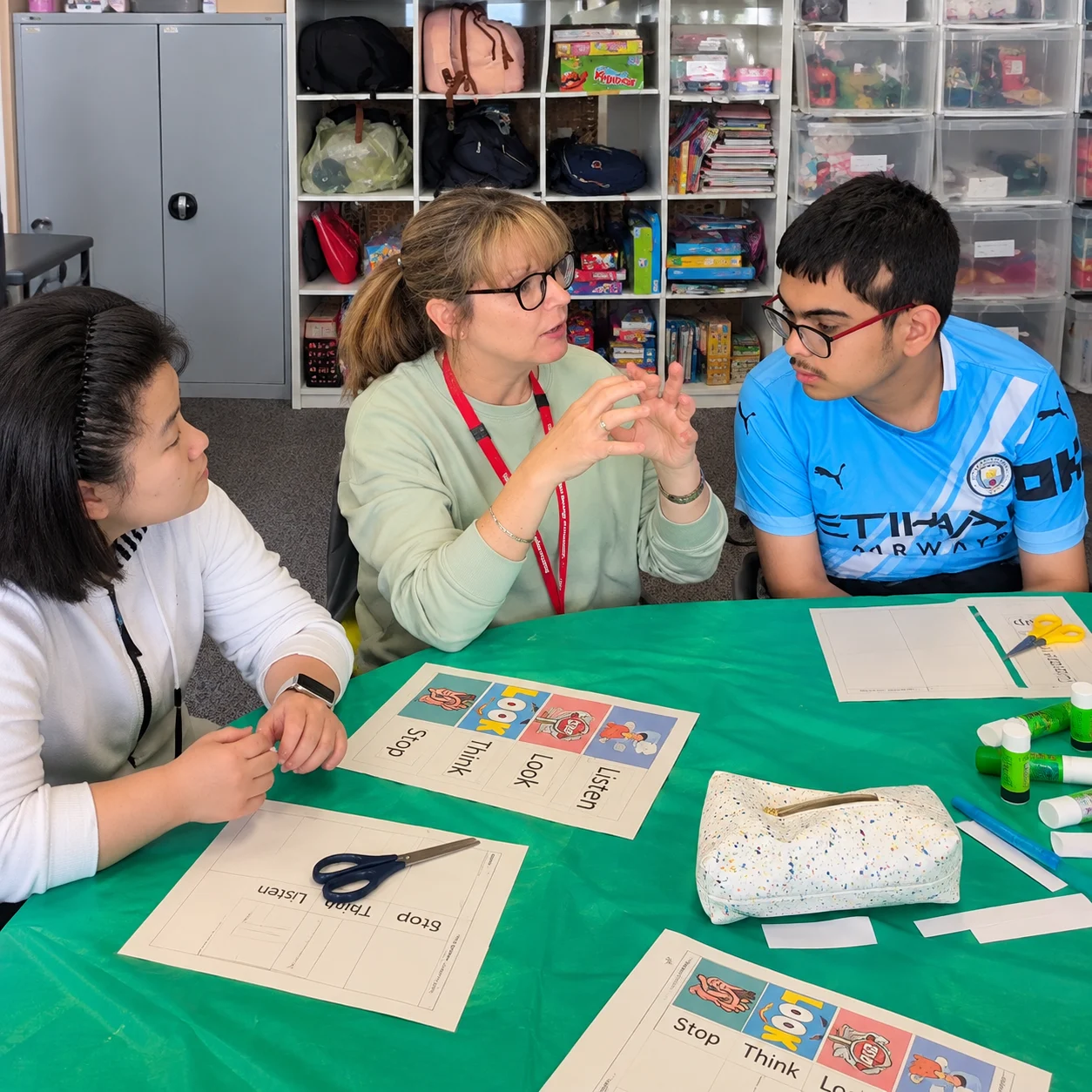
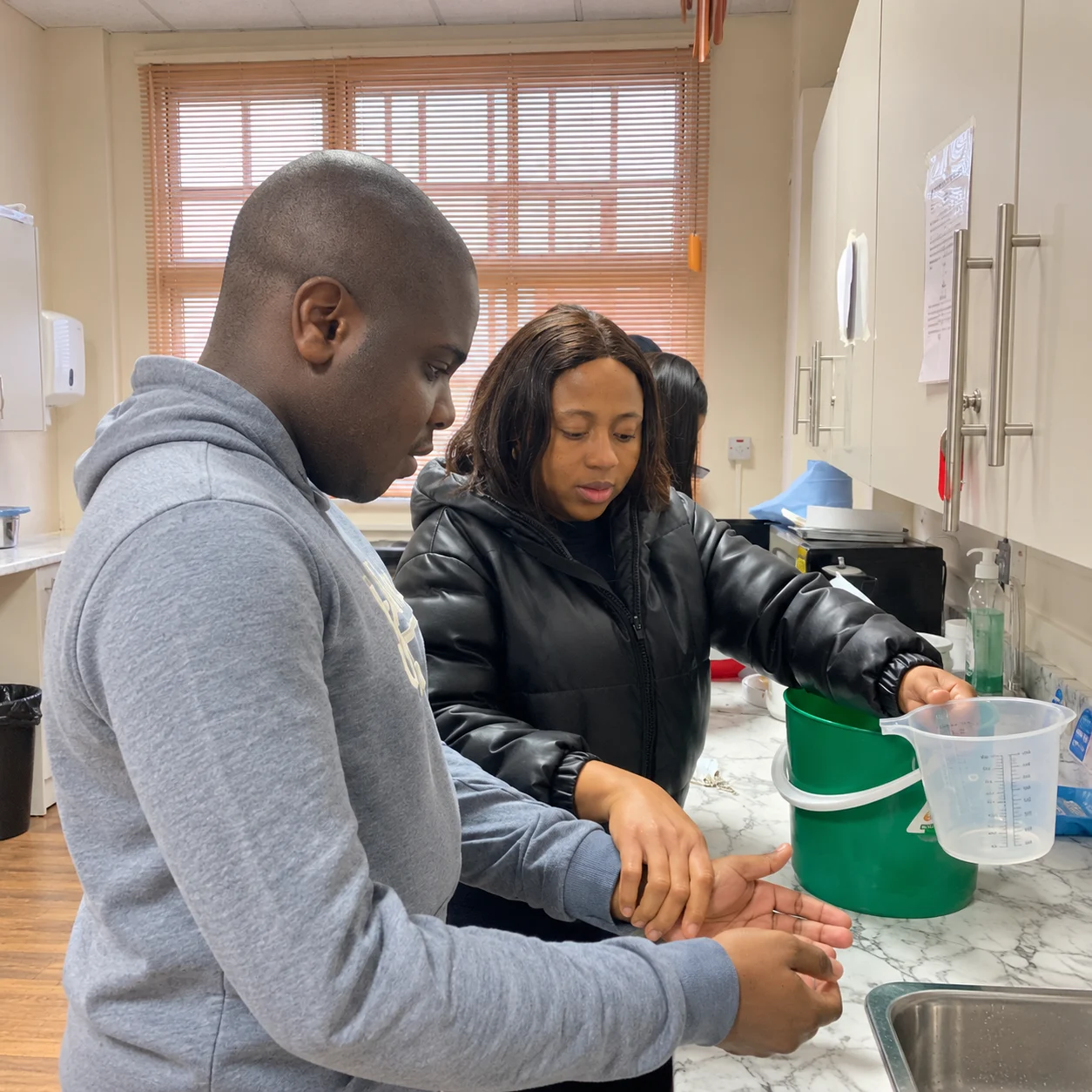
A realistic space for practising everyday routines.
The Independent Living Room is designed to help Learners practise tasks that are difficult to teach through discussion or worksheets alone. It creates a bridge between a structured support environment and the routines people encounter in everyday life.
What Learners can practise
Why the technology matters
Technology is not included because it is novel. We explore whether visual prompts, voice support, smart controls and other accessible tools can help a Learner complete more of a routine with less direct prompting from another person.
Organisational distinction: the Life Skills website explains how Learners use the ILR. The Foundation website carries the wider innovation, funding, demonstration and future-development story.
Focused on a good adult life.
Our outcome areas support the themes that matter in adult social care: dignity, choice, health, relationships, participation and community life.
Personal dignity & respectful support
Physical and mental health & emotional wellbeing
Protection from abuse and neglect
Control over day-to-day life and support
Participation in work, education, training or recreation
Social and economic wellbeing
Domestic, family and personal relationships
Suitable living accommodation and contribution to society
These areas reflect the wellbeing principle in section 1 of the Care Act 2014. Individual goals are aligned to the Learner's support plan or commissioned service specification.
This mapping does not imply statutory or local-authority endorsement.